“Leaky gut” is one of the most talked-about concepts in digestive health, yet it remains one of the most misunderstood. Alternative health circles treat it as the root cause of everything from brain fog to autoimmune disease, while many conventional doctors dismiss it entirely. The truth, as usual, sits somewhere in the middle. Here is what the science actually says about intestinal permeability.
What Is Intestinal Permeability?
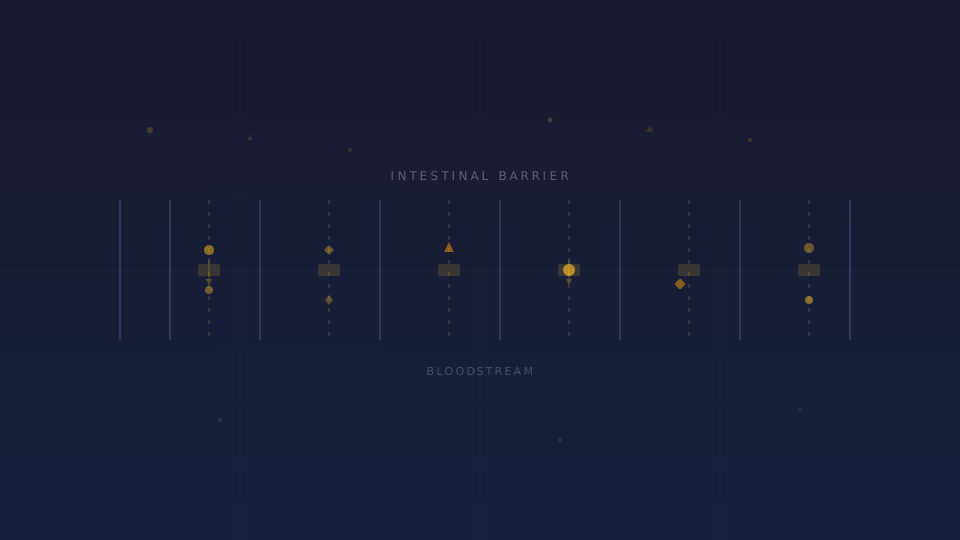
Your intestinal lining is a single layer of cells — just one cell thick — that forms a barrier between the contents of your gut and the rest of your body. These cells are held together by structures called tight junctions, which act like selective gates. They allow water and nutrients to pass through while keeping bacteria, toxins, and undigested food particles contained within the intestinal tract.
When tight junctions become compromised, the barrier becomes more permeable than it should be. Larger molecules, bacterial fragments (like lipopolysaccharides, or LPS), and other substances can slip through the gaps and enter the bloodstream. This triggers an immune response, leading to inflammation.
This process — increased intestinal permeability — is a well-documented, measurable physiological phenomenon. Researchers can assess it using tests like the lactulose-mannitol test, which measures how much of these sugar molecules pass through the gut lining into urine.
”Leaky Gut Syndrome” vs. Increased Intestinal Permeability
Here is where the confusion starts. Increased intestinal permeability is a real, scientifically recognized phenomenon that has been observed and measured in peer-reviewed research for decades. However, “leaky gut syndrome” as a standalone diagnosis — the idea that a leaky gut is the singular root cause of dozens of unrelated conditions — is not a recognized medical diagnosis by any major gastroenterological organization.
The distinction matters. Saying “your gut barrier can become compromised and contribute to disease processes” is supported by evidence. Saying “leaky gut syndrome is causing your fatigue, acne, and joint pain, and this supplement will cure it” is a different claim entirely, and one that outpaces the current science.
What the Research Actually Shows
Studies have found associations between increased intestinal permeability and several conditions:
- Inflammatory Bowel Disease (IBD): Both Crohn’s disease and ulcerative colitis are associated with impaired barrier function. Research published in Gastroenterology has shown that relatives of Crohn’s patients often have increased permeability even before developing symptoms.
- Celiac Disease: Gluten triggers the release of zonulin, a protein that opens tight junctions. This is one of the clearest examples of a dietary trigger directly increasing permeability.
- Type 1 and Type 2 Diabetes: Elevated intestinal permeability has been observed in both types, with research suggesting it may play a role in the autoimmune process of Type 1 diabetes and the chronic inflammation of Type 2.
- Irritable Bowel Syndrome (IBS): Some subsets of IBS patients, particularly those with diarrhea-predominant IBS, show measurably increased permeability.
- Liver Disease: Non-alcoholic fatty liver disease (NAFLD) has been linked to gut barrier dysfunction, with bacterial translocation contributing to liver inflammation.
The critical caveat: in most of these conditions, causation has not been established. Researchers are still working to determine whether increased permeability is a cause, an effect, or part of a feedback loop where it both results from and worsens disease processes. The chicken-or-egg question remains largely unanswered.
What Can Increase Intestinal Permeability?
Several factors have been shown in research to compromise gut barrier function:
- Alcohol: Even moderate consumption can increase permeability, and chronic heavy drinking significantly damages the intestinal barrier.
- NSAIDs: Non-steroidal anti-inflammatory drugs like ibuprofen and aspirin can increase permeability within hours of ingestion.
- Chronic stress: Stress hormones, particularly cortisol, can weaken tight junctions through the gut-brain axis.
- Processed and high-sugar diets: Diets high in refined sugar, additives, and emulsifiers have been shown to alter the gut microbiome and impair barrier function in animal studies.
- Infections: Acute gastrointestinal infections can temporarily or persistently damage the gut lining.
- Dysbiosis: An imbalance in gut bacteria composition can reduce the production of short-chain fatty acids that help maintain barrier integrity.
Evidence-Backed Claims vs. Unproven Claims
| Evidence-Backed | Unproven or Overstated |
|---|---|
| Intestinal permeability is measurable and real | ”Leaky gut syndrome” is a recognized diagnosis |
| Increased permeability is associated with IBD, celiac, and diabetes | Leaky gut is the single root cause of autoimmune disease |
| Alcohol, NSAIDs, and stress can compromise the gut barrier | Everyone has leaky gut and needs to “heal” it |
| Diet and lifestyle changes can support barrier function | Specific supplements can “cure” leaky gut |
| Zonulin release from gluten increases permeability in celiac patients | All people should avoid gluten to prevent leaky gut |
| Gut bacteria play a role in maintaining barrier integrity | A single probiotic strain can fix permeability for everyone |
What Helps Support Gut Barrier Function
While there is no magic cure, several strategies have research backing for supporting intestinal barrier health:
Anti-Inflammatory Diet
A diet rich in vegetables, fruits, whole grains, lean proteins, and healthy fats provides the nutrients your gut lining needs to maintain itself. The Mediterranean diet, in particular, has been associated with improved gut barrier function and a more diverse microbiome. Reducing processed foods, excess sugar, and artificial additives removes substances that may compromise the barrier.
Probiotics
Certain probiotic strains, including Lactobacillus rhamnosus GG and Bifidobacterium infantis, have shown promise in strengthening tight junctions in both animal and human studies. However, effects are strain-specific — not all probiotics are equal, and results vary between individuals.
L-Glutamine
L-glutamine is the primary fuel source for intestinal epithelial cells. Research suggests it can help maintain and repair the gut lining, particularly during periods of stress or illness. Doses used in studies typically range from 5 to 20 grams per day, but you should discuss supplementation with a healthcare provider.
Zinc
Zinc plays a role in maintaining tight junction integrity. Studies have shown that zinc supplementation can help restore barrier function, particularly in people who are deficient. Zinc carnosine, in particular, has been studied for its gut-protective properties.
Additional Supportive Strategies
- Fiber: Feeds beneficial bacteria that produce butyrate, a short-chain fatty acid that nourishes the gut lining.
- Stress management: Practices like meditation, adequate sleep, and regular exercise can reduce the impact of stress hormones on gut permeability.
- Limiting NSAIDs: When possible, reducing reliance on non-steroidal anti-inflammatory drugs can help preserve barrier function.
Track Your Gut Health Patterns
Understanding your digestive health starts with awareness. If you suspect gut barrier issues are affecting you, tracking your bowel movements, diet, and symptoms can reveal patterns that help you and your doctor make informed decisions. Flushy makes it easy to log your daily bowel movements using the Bristol Stool Scale, tag potential triggers like stress, alcohol, or dairy, and spot trends over time — all privately on your device.
Download Flushy and start building a clearer picture of your gut health today.
This article is for informational purposes only and does not constitute medical advice. Consult a healthcare professional for personalized guidance.